Image 1 of 1
A Master Mariner of the 20th Century
A Master Mariner of the 20th Century - Captain John Kemp MBE
A lifetime account of Captain John Kemp MBE: from his birth in 1905, in the small Cornish fishing town of St. Ives, and his early experiences growing up before and during the First World War, through to becoming a highly respected Captain in the Merchant Navy with over fifty years of seamanship.
John was enchanted by the sea from an early age. After a brief spell as a butcher's boy, his father, a barber, finally helped him to become an apprentice in the Hain's Steamship Company on the SS Trevessa. This was hard, poorly-paid work, often in squalid conditions, but John was determined to succeed and gain promotion.
Being a man of strong conviction, John eventually asked to be transferred from the Trevessa which he felt was unsafe, despite protestations from his company. His instinct was proved correct when the Trevessa foundered, with some of her crew losing their lives.
John passed as a Master Mariner in 1930, still working for the Hain's Company. In 1938 he joined the Scottish trampship company Andrew Weir; and at the beginning of the war in 1939 the SS Teviotbank together with John as First Officer, was seconded into the Royal Navy to lay mines.
Following the war John rejoined Andrew Weir, earning an MBE for his part in the mass evacuation of Colombo in 1958 and becoming one of their most successful masters until his retirement in 1971.
This is an insight into the Merchant Navy and a real piece of maritime history, with good accounts of the ships and a large number of black and white photographs.
ISBN: 9781852001025
Size: 217x140mm
Binding: hardback
Length: 135pp
64 b&w photos
A Master Mariner of the 20th Century - Captain John Kemp MBE
A lifetime account of Captain John Kemp MBE: from his birth in 1905, in the small Cornish fishing town of St. Ives, and his early experiences growing up before and during the First World War, through to becoming a highly respected Captain in the Merchant Navy with over fifty years of seamanship.
John was enchanted by the sea from an early age. After a brief spell as a butcher's boy, his father, a barber, finally helped him to become an apprentice in the Hain's Steamship Company on the SS Trevessa. This was hard, poorly-paid work, often in squalid conditions, but John was determined to succeed and gain promotion.
Being a man of strong conviction, John eventually asked to be transferred from the Trevessa which he felt was unsafe, despite protestations from his company. His instinct was proved correct when the Trevessa foundered, with some of her crew losing their lives.
John passed as a Master Mariner in 1930, still working for the Hain's Company. In 1938 he joined the Scottish trampship company Andrew Weir; and at the beginning of the war in 1939 the SS Teviotbank together with John as First Officer, was seconded into the Royal Navy to lay mines.
Following the war John rejoined Andrew Weir, earning an MBE for his part in the mass evacuation of Colombo in 1958 and becoming one of their most successful masters until his retirement in 1971.
This is an insight into the Merchant Navy and a real piece of maritime history, with good accounts of the ships and a large number of black and white photographs.
ISBN: 9781852001025
Size: 217x140mm
Binding: hardback
Length: 135pp
64 b&w photos
About the author:
Eric Kemp
Eric Kemp was educated in St. Ives schools and Truro School in Cornwall. From here he followed his father into the Merchant Navy, joining HMS Worcester for cadet training in 1953.
He became an apprentice with the Ellerman and Bucknall Steamship Company, later becoming a second officer with the Palm Line. During his years with these two companies he travelled around the world.
As described in this book, Eric achieved chief officer status with the Trinity House Steamship Vessel Service, and finally became a master on the Isles of Scilly Steamship Company’s ferry RMS Queen of the Isles. He also later served with the Carisbrook Shipping Company based on the Isle of Wight.
With his wife Jill and their two children, he has remained based in St. Ives, becoming a Trinity House pilot for Mount’s Bay and a Cornish fisheries officer in MAFF. He has also been the St. Ives Lifeboat Secretary and a Liberal councillor. In the year 2000 he was Chairman of the Newlyn Fish Festival and is a member of the well-known Mousehole Male Voice Choir. In his role as a local Methodist preacher he is the Senior Steward of the Carbis Bay Wesley Methodist Church.
With his odd spare time Eric helps at the St. Ives Museum where he can put his Merchant Navy knowledge to good use, and gives talks to various local societies about his experiences at sea and working on the Cornish coast.
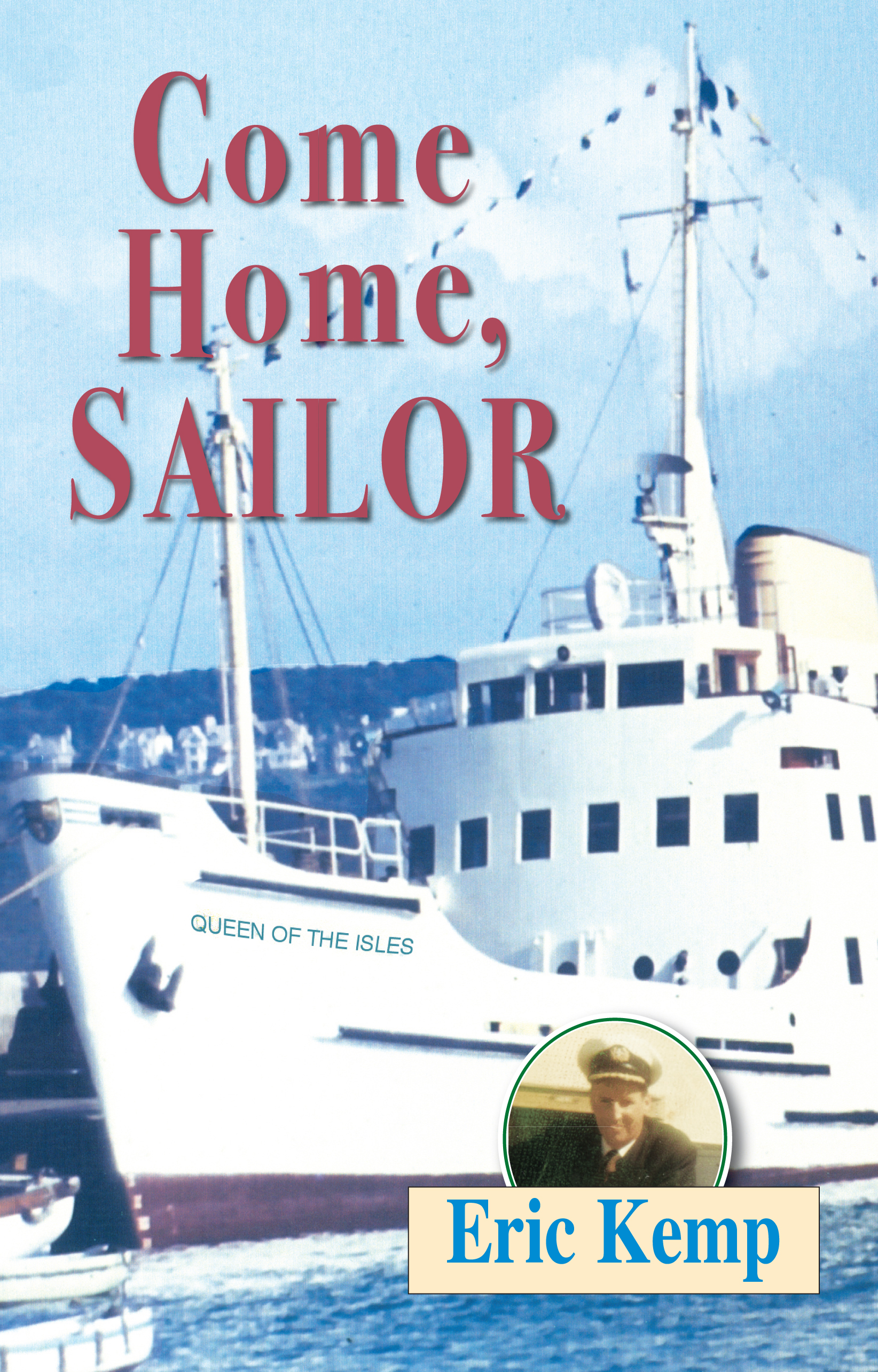
Following his book Yes Dad, I Want to Go to Sea!, Eric Kemp continues his story with his career change from lengthy deep-sea voyages, to a more family friendly lifestyle working from Penzance for the Trinity House Steam Vessel Service. It was while relieving crews and servicing lighthouses and lightships on board THV Stella, that Eric witnessed the notorious Torrey Canyon oil-tanker disaster near Land's End.
By now well established in his hometown of St. Ives, Eric was elected onto the Borough Council, where he helped win public access to previously secret committee meetings, but soon realised he was considered a bit of a maverick within the system. He also now became Captain of the Queen of the Isles, one of the two ships running between Penzance and the Isles of Scilly, a post he held until the ship was sold.
At this point Eric became a self-employed Trinity House Pilot for the port of Penzance; purchasing his own boats and employing crew members to help. His expertise in handling shipping within and around Mount's Bay is reflected through his own experiences and those of the characters on board the ships and boats arriving at the port.
Also appointed the Managing Secretary of the St. Ives Lifeboat Station, he recounts in well-remembered detail a number of the amazing rescues and sad tragedies that took place with both the inshore and offshore lifeboats during the period of the 1970s and 80s, including occasions that were commended with royal approval.
Now retired, Captain Eric Kemp can look back at a long and fulfilling sea-going career where, whether working with captains, coastguards and harbour masters, or rubbing shoulders with royalty, he has always responded to those around him with good grace and humour.
ISBN: 9781852001728
Size: 217x140mm
42 b/w photographs
Binding: hardback
Length: 181pp
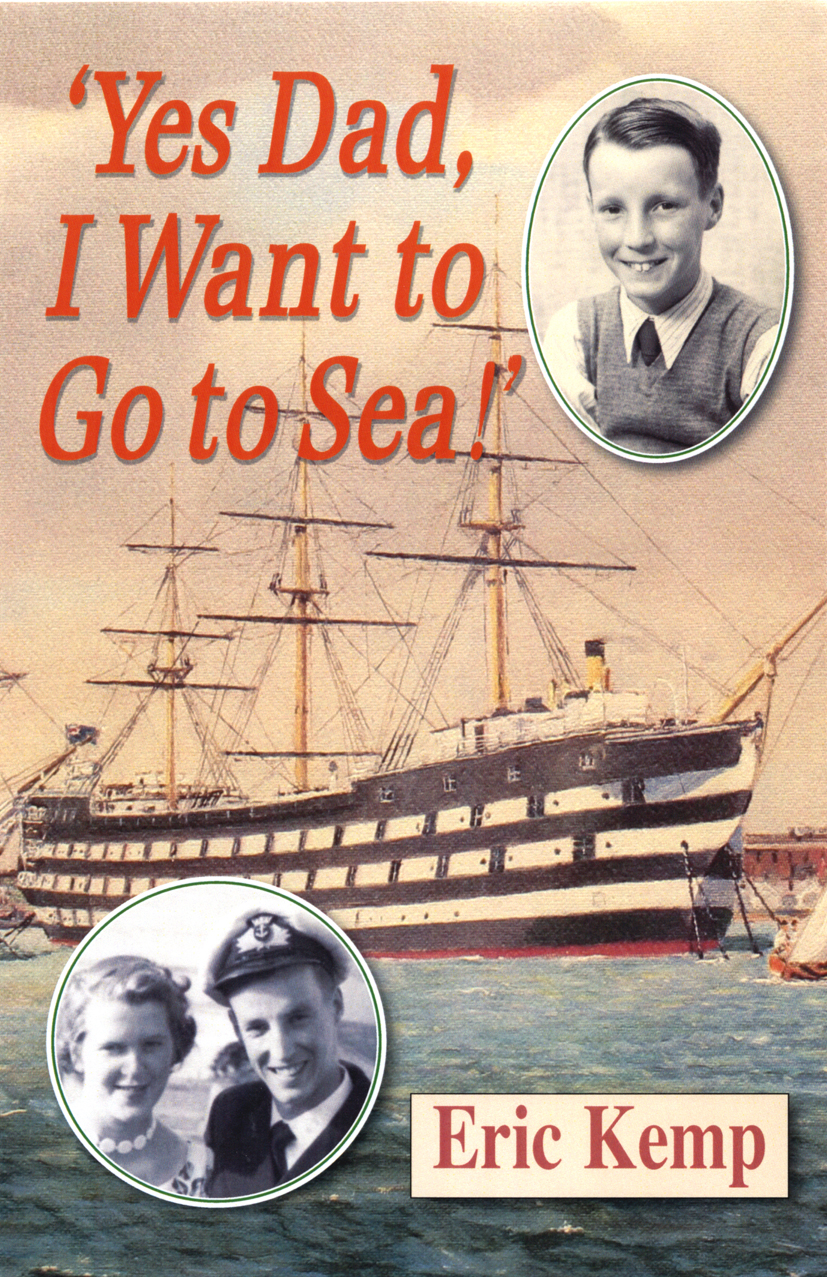
Even during his childhood days in the Cornish fishing town of St. Ives, Eric Kemp knew he was bound for a life at sea. While his mother was cooking pasties in `the slab', better known as a Cornish range, young Eric would be upstairs watching the comings and goings of the ships as they were piloted into the nearby port of Hayle.
Being the son of a captain in the Merchant Navy left Eric's upbringing mainly to his mother, but he remembers well the days when he was able to travel on ships with his father on short voyages, and particularly the time when he finally told his father that he wanted to go to sea himself. After trying in vein to dissuade him from doing so, both his parents finally gave their blessing.
So, after finishing his education at Truro School, he set out to become a cadet on HMS Worcester, then moored on the Thames. His training included work on the famous Cutty Sark and also brief spells of work experience on larger ships such as the MV Singularity.
Following training, Eric became a Merchant Navy apprentice in the shipping company Ellerman Lines. He remembers both tough times and amusing incidents; often involving the many characters of the seamen who made up the crews.
During these years Eric was to travel all around the world, with regular visits to ports in India, Africa, Canada and the USA. However, on marrying a local St. Ives girl he realised that he needed more time at home and this prompted him to join the Palm Line on shorter voyages.
Steeped within this account is the importance of the Merchant Navy in the postwar era through to the mid-1960s; a time when ships were still responsible for nearly all our imports and exports and a time before containers changed the face of shipping forever.
ISBN: 9781852001537
Size: 217x140mm
Binding: hardback
Length: 136pp
48 b&w photographs
A Master Mariner of the 20th Century - Captain John Kemp MBE
A lifetime account of Captain John Kemp MBE: from his birth in 1905, in the small Cornish fishing town of St. Ives, and his early experiences growing up before and during the First World War, through to becoming a highly respected Captain in the Merchant Navy with over fifty years of seamanship.
John was enchanted by the sea from an early age. After a brief spell as a butcher's boy, his father, a barber, finally helped him to become an apprentice in the Hain's Steamship Company on the SS Trevessa. This was hard, poorly-paid work, often in squalid conditions, but John was determined to succeed and gain promotion.
Being a man of strong conviction, John eventually asked to be transferred from the Trevessa which he felt was unsafe, despite protestations from his company. His instinct was proved correct when the Trevessa foundered, with some of her crew losing their lives.
John passed as a Master Mariner in 1930, still working for the Hain's Company. In 1938 he joined the Scottish trampship company Andrew Weir; and at the beginning of the war in 1939 the SS Teviotbank together with John as First Officer, was seconded into the Royal Navy to lay mines.
Following the war John rejoined Andrew Weir, earning an MBE for his part in the mass evacuation of Colombo in 1958 and becoming one of their most successful masters until his retirement in 1971.
This is an insight into the Merchant Navy and a real piece of maritime history, with good accounts of the ships and a large number of black and white photographs.
ISBN: 9781852001025
Size: 217x140mm
Binding: hardback
Length: 135pp
64 b&w photos
From his early childhood days in St. Ives, Eric had always known he was destined for a life at sea, and he has already told the story of his Merchant Navy cadet training on HMS Worcester in his book Yes, Dad I Want to Go to Sea!
After his training with HMS Worcester, Eric worked as an apprentice with the Ellerman and Bucknall Steamship Company, where he gained his Chief Officer’s Certificate. Following this he joined the Palm Line as a Second Officer.
Here he remembers his five years with the Palm Line from 1960 to 1965. During this time he served in fourteen of the company’s ships, ranging from the ageing Ashanti Palm to the more modern Ikeja Palm. These ships crossed the oceans to West Africa and back, with voyages spread between Dakar in the north to Luanda and Lobito in the south, often with sixteen hour working days in the intense tropical heat.
At this time countries such as Ghana, Nigeria and Sierra Leone were becoming independent and this often added considerably to the stress and difficulties when loading and off-loading goods in the port docks, and it was Eric’s job to oversee that these operations ran smoothly.
Eric recounts the highs and lows he faced in an honest and engaging way, whether it was facing a ship plagued with rats, establishing a friendly relationship with dock workers, all of whom he always treated as equals regardless of hierarchy, or dealing with captains that bullied and made life difficult and occasionally dangerous.
During his time with the Palm Line Eric married Jill and his first son Ian was born, and Eric recounts how he was always happiest on his return to his hometown of St. Ives in Cornwall to be with his family. So, after a sadly rather fractious experience with the company, and having by then gained his Master Mariner’s Certificate, he left the Palm Line. He then went on to have his second son Jeremy and become captain of the Isles of Scilly ship RMS Queen of the Isles.
ISBN: 9781852002107
Size: 217x140mm
Binding: hardback
Photos: TBC
Length: TBC