 Image 1 of 1
This is along awaited book.
For the first time parents are treated as intelligent as well as caring people who have a legitimate interest in their children's educational progress and situation.
Peter Lawrence does not write down to parents but treats them as intelligent partners in a study of the origins and nature of learning disabilities in particular those associated with learning to read. While the whole of the text is relevant to the subject of dyslexia, he puts forward a strong case for discontinuing the use of this ambiguous term.
The concept of intelligence and the processes of perception are discussed in a comprehensive and comprehensible way and their significance for formal learning considered. Fortunate parents, whose children are not disabled learners in any specific sense will discover information which throws new light on such facile comments as 'could do better', and will find new insights into the processes of formal learning especially in the early years.
Intelligence testing, its purpose and limitations are discussed, together with a consideration of the basic factors of heredity and environment and their respective significance for behavior and learning.
The much misused and often misconceived description of 'minimal brain damage' is considered at length with reassuring conclusions for many parents.
Although intended primarily for parents, there is probably no teacher who would not benefit from reading this book.
ISBN: 9781852000103
Size: 217x140mm
Published: 1987
Binding: hardback
Length: 180pp
This is along awaited book.
For the first time parents are treated as intelligent as well as caring people who have a legitimate interest in their children's educational progress and situation.
Peter Lawrence does not write down to parents but treats them as intelligent partners in a study of the origins and nature of learning disabilities in particular those associated with learning to read. While the whole of the text is relevant to the subject of dyslexia, he puts forward a strong case for discontinuing the use of this ambiguous term.
The concept of intelligence and the processes of perception are discussed in a comprehensive and comprehensible way and their significance for formal learning considered. Fortunate parents, whose children are not disabled learners in any specific sense will discover information which throws new light on such facile comments as 'could do better', and will find new insights into the processes of formal learning especially in the early years.
Intelligence testing, its purpose and limitations are discussed, together with a consideration of the basic factors of heredity and environment and their respective significance for behavior and learning.
The much misused and often misconceived description of 'minimal brain damage' is considered at length with reassuring conclusions for many parents.
Although intended primarily for parents, there is probably no teacher who would not benefit from reading this book.
ISBN: 9781852000103
Size: 217x140mm
Published: 1987
Binding: hardback
Length: 180pp
Brought up within a Christian family and attending a boarding school with a very narrow Bible-based Christian heritage, it took Leslie Scrase until his forties to break free. Now with many grandchildren who have no religious beliefs at all, he has found himself looking at the biblical gospel stories again and asking whether Jesus has any relevance at all in this increasingly irreligious and secular age.
ISBN: 9781852002114
Size: 217x135mm
Binding: paperback
Length: 83pp
This often heartbreaking account by Carol, whose son, Paul, was born with many difficulties, including autism, is told with the honesty and sincerity necessary to portray the conflicting emotions faced by any family, and particularly a mother, in such circumstances. The overbearing feelings of guilt, failure and inadequacy have to be resolved to enable a happy life with her family.
When multiple disabilities gradually begin to manifest themselves in Paul, Carol learns how to deal with each trauma individually; discovering that a sense of humour, along with the loyalty and care of her family, is essential, as children with severe difficulties react very differently to others in everyday situations.
Despite everything, there is light at the end of the tunnel, as Paul’s bravery and courage to fight through illness and adversity, and become a happy young man despite all his disabilities, make everything else seem to pale into insignificance. If he could speak, he would surely say: “My life is worth living!”
ISBN: 9781852001896
Size: 212x135mm
Binding: Paperback
Length: 162pp
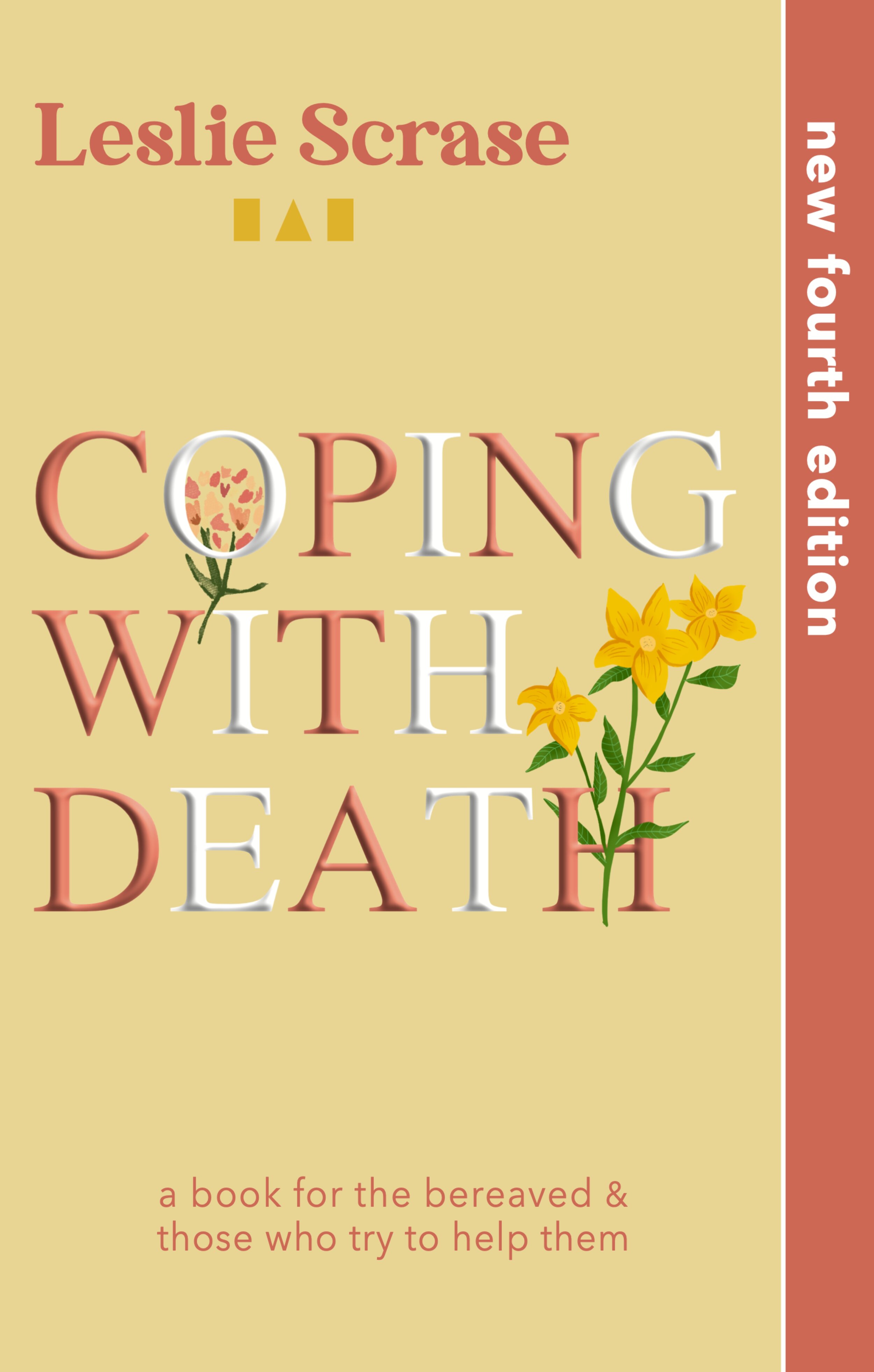
In this short book author Leslie Scrase helps to uncover and explain those emotions felt when having to deal with death, something we will all be involved with during various parts of our lives but which is often so very difficult to contemplate or discuss.
After many years of conducting Humanist ceremonies the author has gained a great deal of sympathetic knowledge and understanding about bereavement and how to cope with it.
Starting with the funeral ceremony itself, the book goes on to discuss the problems of coping with untimely death, surviving and progressing after bereavement, whether there is life after death, and dealing with the anger or guilt which death can induce.
At the end of the book there are a good number of passages and poems to help stimulate or bring comfort to readers, many of which could also be particularly useful to anyone looking for something suitable to quote within a memorial ceremony.
ISBN: 9781852002053
Size: 217x135mm
Binding: paperback
Length: 93pp
Sometimes it is the very simplicity of the tale which makes the reading worthwhile, and this is such a case.
Jean Cooper's Mam, Violet May Coulton, lived to be 100 years of age and the story spanning those years from 1905 to 2006 is told here via memories and photographs. She was one of seven children and the challenges she faced, along with so many women of her generation, would seem extraordinary to most younger women in Britain today. Life was often hard and cruel, with true poverty and little love.
At the age of twelve Violet went to work during the First World War. Then followed several different jobs including being a scullery maid at Egerton Lodge, Melton Mowbray, where very many years later she would return as an esteemed guest, finally able to see what was upstairs! This in itself shows how considerably times changed during one lifetime. Nevertheless, all those years of poverty and hard work at a young age, then the Depression and no work and living through two world wars, never truly dampened the spirit of this indomitable woman.
The stories remembered in this book by the author and her two sisters, Audrey and Nancy, reflect the history of one life which itself reflects the history of Britain over those hundred years, and they will be an inspiration to all who read them.
ISBN: 9781852001179
Size: 217x140mm
Binding: hardback
Length: 233pp
This is along awaited book.
For the first time parents are treated as intelligent as well as caring people who have a legitimate interest in their children's educational progress and situation.
Peter Lawrence does not write down to parents but treats them as intelligent partners in a study of the origins and nature of learning disabilities in particular those associated with learning to read. While the whole of the text is relevant to the subject of dyslexia, he puts forward a strong case for discontinuing the use of this ambiguous term.
The concept of intelligence and the processes of perception are discussed in a comprehensive and comprehensible way and their significance for formal learning considered. Fortunate parents, whose children are not disabled learners in any specific sense will discover information which throws new light on such facile comments as 'could do better', and will find new insights into the processes of formal learning especially in the early years.
Intelligence testing, its purpose and limitations are discussed, together with a consideration of the basic factors of heredity and environment and their respective significance for behavior and learning.
The much misused and often misconceived description of 'minimal brain damage' is considered at length with reassuring conclusions for many parents.
Although intended primarily for parents, there is probably no teacher who would not benefit from reading this book.
ISBN: 9781852000103
Size: 217x140mm
Published: 1987
Binding: hardback
Length: 180pp


Three Paths to a Decent Life: Dismantling the teaching of St. Paul Sequel to Jesus for a Secular Age?
The Christian New Testament is dominated by two men, Jesus and Paul. Take away the four gospels and the letters of Paul and it is surprising how little of real significance is left.
Following Leslie Scrase’s recent book on the relevance of Jesus for a secular age, he felt he had to continue and take a closer look at Paul.
More than any other person, Paul was responsible for turning a small Jewish sect into an organisation holding the capacity to become a world religion. His dynamic, driven, self-assured character, combined with his organisational skills, put together with his determination that the new religion was for all mankind and not just for Jews, led to the early spread and success of the new religion.
Without Paul it is more than possible there would be no Christian churches and no Christian religion today.
ISBN: 9781852002145
Size: 217x135mm
Binding: paperback
Length: 83pp