Image 1 of 1
Lady Kate
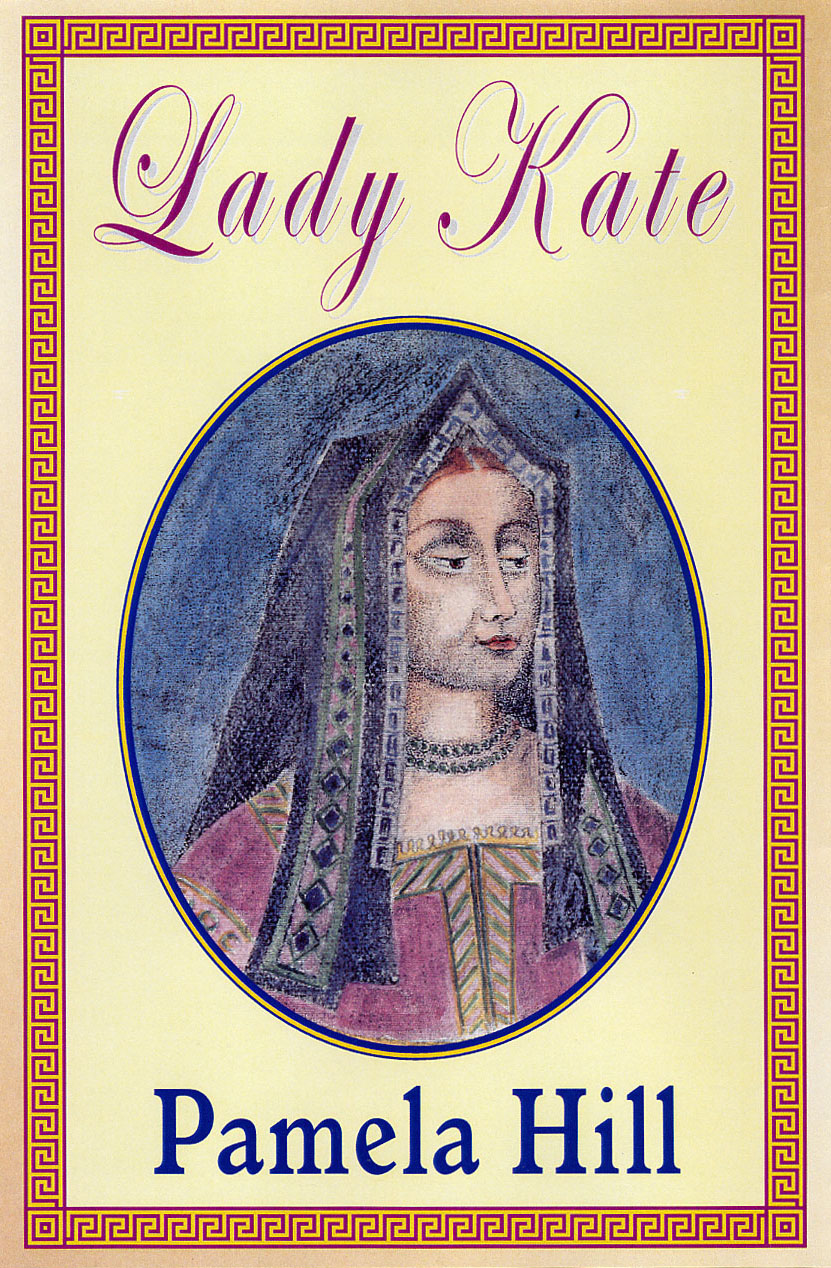
Lady Katherine Gordon, daughter of the much-married earl of Huntly, starts life with a handicap; she is uncertain which of her f ather’s wives had been her mother. Her courage and beauty overcome this uncertainty, and in course of a varied life she acquires the lasting devotion of her own king, James IV, and of many other men, four of whom she marries. A fifth is Henry VII, who surprisingly – he killed her first husband for political reasons – is recorded as desiring no other comfort than her company. Kate is generous enough to give it to him. She also greatly loves his queen.
Her story includes the tragedy of the stranger whose first bride she became, and who may or may not have been the younger of the sons of Edward IV said to have been murdered earlier in the Tower. This and the later marriages apart, the story of European entanglements connected with the desired marriage of Henry VII ’s son Arthur and an infanta of Spain, who later married his brother Henry VIII, make compelling reading. Through it all Kate continues wise, kindly and beautiful even in old age. She is one of the few people to have looked down on her own face in a tomb she did not occupy, leaving her third husband inside it and returning to where she had been happy with her second. She also, though differently, loved her young fourth husband, who was to carve out a future for himself after Kate died in 1537, the year Henry VIII at last got himself a son.
All these people come alive in Kate’s recollections, which include her grief at news of the Scots defeat at Flodden. Her brother, and ancestor of Lord Byron, was killed there with James IV, who had married Henry VII ’s daughter and in the end gave rise to the present royal family.
ISBN: 9781852001254
Size: 217x140mm
Binding: hardback
Length: 197pp
Lady Katherine Gordon, daughter of the much-married earl of Huntly, starts life with a handicap; she is uncertain which of her f ather’s wives had been her mother. Her courage and beauty overcome this uncertainty, and in course of a varied life she acquires the lasting devotion of her own king, James IV, and of many other men, four of whom she marries. A fifth is Henry VII, who surprisingly – he killed her first husband for political reasons – is recorded as desiring no other comfort than her company. Kate is generous enough to give it to him. She also greatly loves his queen.
Her story includes the tragedy of the stranger whose first bride she became, and who may or may not have been the younger of the sons of Edward IV said to have been murdered earlier in the Tower. This and the later marriages apart, the story of European entanglements connected with the desired marriage of Henry VII ’s son Arthur and an infanta of Spain, who later married his brother Henry VIII, make compelling reading. Through it all Kate continues wise, kindly and beautiful even in old age. She is one of the few people to have looked down on her own face in a tomb she did not occupy, leaving her third husband inside it and returning to where she had been happy with her second. She also, though differently, loved her young fourth husband, who was to carve out a future for himself after Kate died in 1537, the year Henry VIII at last got himself a son.
All these people come alive in Kate’s recollections, which include her grief at news of the Scots defeat at Flodden. Her brother, and ancestor of Lord Byron, was killed there with James IV, who had married Henry VII ’s daughter and in the end gave rise to the present royal family.
ISBN: 9781852001254
Size: 217x140mm
Binding: hardback
Length: 197pp
About the author:
Pamela Hill
Full-time writer Pamela Hill was educated in Scotland and originally trained to be a teacher. She has written around 91 books in various different categories of fiction and non-fiction, but it is her historical work which now takes precedence. From her home in Hertfordshire she is presently working on her latest work of non-fiction.
Whilst being a tremendously well-researched work on Scottish heraldic heritage, this is not simply an account of Scottish history. The fact is that this book contains the stories of men and women who genuinely believed in their inheritance, their diversity and their ability to regain for Scotland and England a truly great kingdom; they are the Jacobites.
From the time of the Glorious Revolution in 1688 and James II’s fleeing the country, the Jacobite cause has existed. A strong belief that they should serve the proper and rightful King was their strength and ambition, and this feeling of existing for, and belonging to, the Jacobite movement is something which has been passed down in many families throughout Scotland across the intervening centuries.
The original mantle was passed from James II to James III and VIII de jure, and then on to Charles Edward Stuart, the man known to all as Bonnie Prince Charlie who fought at Culloden. Whilst this latter figure has been romanticised over the years, with his flight from the battlefield aided by Flora MacDonald, this book tells the story of all those others involved in the great Jacobite cause before that fateful day. It includes the stories of many other truly heroic women such as Clementina Sobieska, James III ’s wife and mother to Charles Edward, who travelled across the Alps incognito to marry the man she loved although she had never yet seen him in person.
These individual stories of men and women bound by a single cause make an interesting and compelling read, if sometimes tragic, and not all have previously been published except as parts of family genealogies. So this is probably the first comprehensive chronicle of those following that proud Jacobite cause.
ISBN: 9781852001292
Size: 217x140mm
Binding: hardback
Length: 174pp
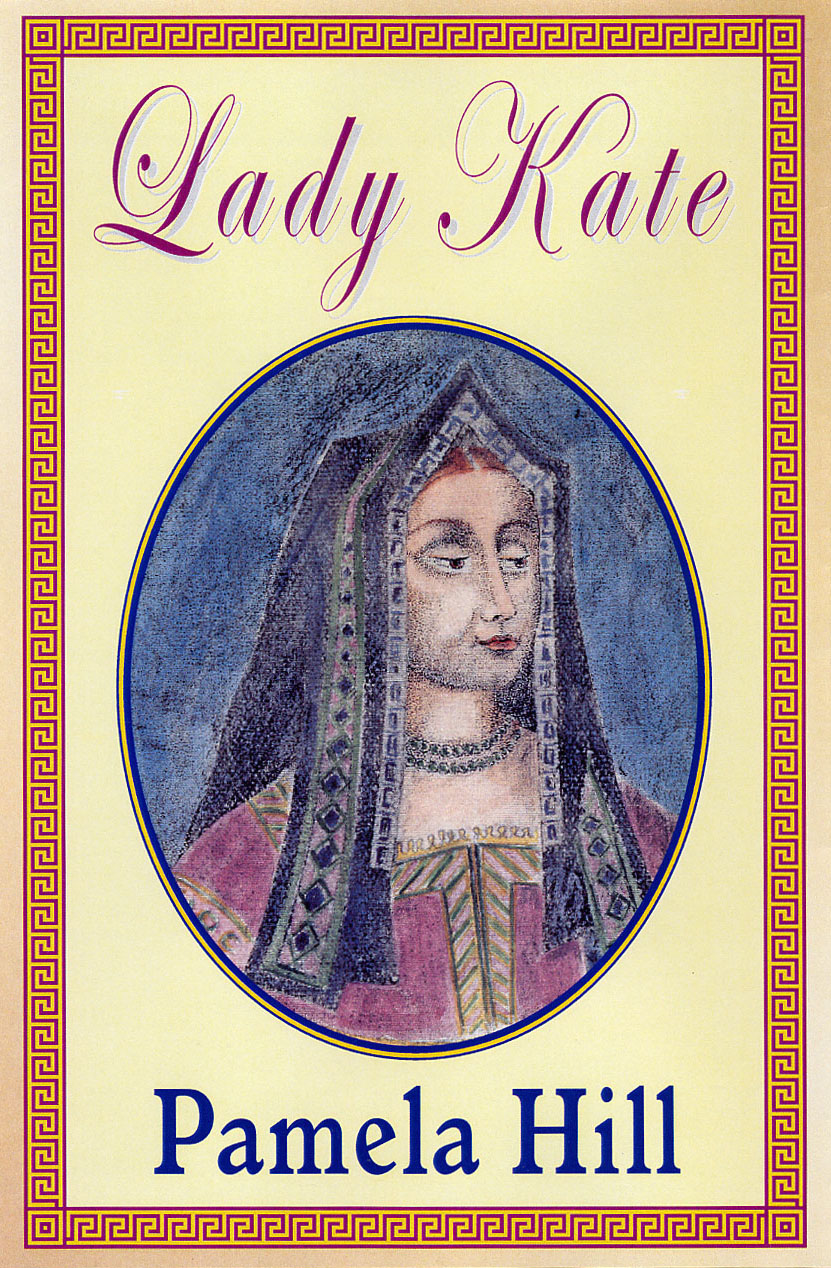
Lady Katherine Gordon, daughter of the much-married earl of Huntly, starts life with a handicap; she is uncertain which of her f ather’s wives had been her mother. Her courage and beauty overcome this uncertainty, and in course of a varied life she acquires the lasting devotion of her own king, James IV, and of many other men, four of whom she marries. A fifth is Henry VII, who surprisingly – he killed her first husband for political reasons – is recorded as desiring no other comfort than her company. Kate is generous enough to give it to him. She also greatly loves his queen.
Her story includes the tragedy of the stranger whose first bride she became, and who may or may not have been the younger of the sons of Edward IV said to have been murdered earlier in the Tower. This and the later marriages apart, the story of European entanglements connected with the desired marriage of Henry VII ’s son Arthur and an infanta of Spain, who later married his brother Henry VIII, make compelling reading. Through it all Kate continues wise, kindly and beautiful even in old age. She is one of the few people to have looked down on her own face in a tomb she did not occupy, leaving her third husband inside it and returning to where she had been happy with her second. She also, though differently, loved her young fourth husband, who was to carve out a future for himself after Kate died in 1537, the year Henry VIII at last got himself a son.
All these people come alive in Kate’s recollections, which include her grief at news of the Scots defeat at Flodden. Her brother, and ancestor of Lord Byron, was killed there with James IV, who had married Henry VII ’s daughter and in the end gave rise to the present royal family.
ISBN: 9781852001254
Size: 217x140mm
Binding: hardback
Length: 197pp
Prinny Remembers - the Private Reflections of His Majesty King George the Fourth
Thackeray cruelly wrote of George IV as no more than a tailor’s dummy. Later verdicts have been founded on this. A more recent one states that he was ‘an undutiful son, a bad husband, and a callous father,’ without finding very much to say against his kingship.
None of the above is accurate, given the knowledge of lately revealed letters from George Augustus himself and those of his daughter, Princess Charlotte. George, better remembered as Prince Regent and often called Prinny, was in many ways a secretive man despite his outward flamboyance. Hints here and there in the Princess ’s letters show him as an affectionate father in private. In public, his attitude to her had to be ambivalent because her mother, long estranged from him by her own choice, made common cause with his political enemies, and what has generally been put down to caprice can be seen, knowing the facts, as statesmanship.
This charming, gifted and intelligent man contrived, despite an appalling hereditary illness concealed with great courage, to give his name to a brilliant Regency and thereafter to reign as King for a further ten years.
Prinny Remembers is an attempt to reconstruct the probable thoughts and memories of this secret man, dying almost alone at Windsor, old, ill and blind, in 1830, and put right the biased press usually given to him.
ISBN: 9781852001223
Size: 217x140mm
Binding: hardback
Length: 251pp
A Tale of Strawberries - Shakespeare’s Journeys in Scotland
Pamela Hill has put flesh on the bones of the assumption that Shakespeare went to Scotland. The acceptance of this fact, presumed not least by the information in Macbeth, together with the matter of the cryptic messages in his plays, has been well-founded by many historians.
In A Tale of Strawberries Shakespeare’s visit to Scotland happens in the years 1592-93, when theatres in London are closed because of plague. He tours Scotland with a small band of players.
He arrives in time to hear rumours about the murder of a young earl in February, meets the suspected murderer Huntly and his possible instigator, the enigmatic King James VI. The king’s fears, jealousies and devious forms of revenge giving Shakespeare many new stories, several of which will be used in his plays, including Othello.
The people he meets, some of whom remember the king’s dead mother Mary Stuart (Queen of Scots), and the fate of those who had helped or hindered her and her son, are varied enough to make a kind of tapestry. They accept him as a writer and player, allowing him to know some of their secrets. The tale of the blood-stained strawberry embroidered handkerchief, produced by Mary Stuart herself, which passes from Huntly to his sister Jean, being but one of many.
Following these journeys throughout Scotland, Shakespeare returns to London by Christmas 1594.
ISBN: 9781852001135
Size: 217x140mm
Binding: hardback
Length: 155pp
A novel portraying ironic insight into the mid-nineteenth century, where a puritan régime persists on the surface but certainly not beneath it. . .
After the death of his reprobate uncle, the idealistic young squire Gareth Seaborne inherits the family estate, together with money only to be awarded if there is a son and heir born within two years.
Stella, the squire’s beautiful wife of Viking descent, fails to become pregnant, so a plan is hatched whereby the devoted maid-servant Pilar secretly gives birth to a boy. The deception is uncovered by the cruel and lascivious Sheriff Stern, who blackmails his way into Stella’s bed. From this liaison a daughter is born, who is deaf but grows to have her father’s licentious ways; and a new-found wantonness is awakened in Stella who, with the squire away helping the Irish in the famine, becomes ever more inextricably involved with the man she originally despised.
Secrecy and intrigue abound as these characters continue their improper course, just as that of the luminous planet Venus. But which of them will finally be fulfilled?
ISBN: 9781852001049
Size: 217x140mm
Binding: hardback
Length: 160pp
This could be a satire on every non-Aga saga ever written. For the literal-minded it is a salacious story of sin, crime, death and disaster over the century from Waterloo to the First World War. The earlier curse of an unwilling bride touches all her descendants from her marriage with her spendthrift Tesson father ’s chief creditor, who also takes his estate. She bears this husband a son, then elopes with her cousin. The descent of the moneylender become lords of the manor, while those from the elopement become their servants and concubines.
The estate of Lackmere possesses a floor of Romano-British tiles which are cemented over as improper by the fourth Lord Corbell. Though he is ordered to marry a selected cousin to restore the bloodline, the future fourth lord runs off with a silly young woman who tight-laces, ensuring that the child of the marriage will be deformed.
This son, Edmund, finds an enamel miniature of his sinful grandmother and is ordered to sink the smashed fragments in the lake. He manages to secrete one green eye. Meantime his father, the prurient fourth Lord, succumbs to fleshly desire for the only woman his son will ever love. The result is a daughter who is deaf from birth injury, randy and eventually seduced by the black-hearted cousin Alfred. In revenge, Edmund marries Alfred ’s golden-haired fiancée despite her protests. He also removes the cement from the tiles to expose their erotic images.
A small plain governess arrives to teach their backward daughter; only to suffer at the hands of the lecherous lord. Results multiply, and the manipulative housekeeper, formerly a Tesson, who has borne a child to the third lord, determines that through her brain-damaged grandson, last of the old line, Tessons shall again become squires of Lackmere.
It is a story of much wanton lust, well set against the historical backdrop of the 19th century.
ISBN: 9781852001308
Size: 217x140mm
Binding: hardback
Length: 396pp