
 Image 1 of 1
Six Feet Over: Pleasures and Perils of Aerial Crop Spraying
Among many books written by pilots there were previously none covering the indomitable spirit of the low-flying crop sprayer. Peter Charles is one such pilot who, after flying 12,000 hours over thirty years, has now written of his adventures carrying out this often dangerous and always demanding type of flying.
His ambition to work on aircraft was first realised when he joined the Air Transport Auxiliary during the Second World War as a ground engineer. Following this he qualified as a Licensed Aircraft Engineer and worked for several airline and charter companies. However, it was on emigrating to Australia in 1951, 'the best £10 I ever spent', that he learnt to fly and obtained his Commercial Pilot's Licence, then joined a newly formed aerial crop spraying company flying Tiger Moths.
He describes flying in many different countries including Africa, South America and Austria, telling of some very amusing incidents as well as some frustrating situations and difficult clients.
Eventually he is able to start his own crop spraying company in Norfolk with Francois Lesieur, a friend from earlier crop spraying operations, and this is when all his previous engineering and flying knowledge is put into good practice.
ISBN: 9781852000776
Size: 217x140mm
Binding: hardback
Length: 240pp
photos & drawings
Among many books written by pilots there were previously none covering the indomitable spirit of the low-flying crop sprayer. Peter Charles is one such pilot who, after flying 12,000 hours over thirty years, has now written of his adventures carrying out this often dangerous and always demanding type of flying.
His ambition to work on aircraft was first realised when he joined the Air Transport Auxiliary during the Second World War as a ground engineer. Following this he qualified as a Licensed Aircraft Engineer and worked for several airline and charter companies. However, it was on emigrating to Australia in 1951, 'the best £10 I ever spent', that he learnt to fly and obtained his Commercial Pilot's Licence, then joined a newly formed aerial crop spraying company flying Tiger Moths.
He describes flying in many different countries including Africa, South America and Austria, telling of some very amusing incidents as well as some frustrating situations and difficult clients.
Eventually he is able to start his own crop spraying company in Norfolk with Francois Lesieur, a friend from earlier crop spraying operations, and this is when all his previous engineering and flying knowledge is put into good practice.
ISBN: 9781852000776
Size: 217x140mm
Binding: hardback
Length: 240pp
photos & drawings

When Simone set off from New Zealand in the early 1990s, eager to experience what the world had to offer, she couldn’t have imagined how things would develop. The Iron Curtain was falling and the world seemed to be opening up to nations previously cut off from the western world.
Against this backdrop of change, she was one of a group of Kiwi friends who would embark on the journey of a lifetime called ‘The Serious Road Trip’. Initially sparked off by the plight of the orphans in Romania, they planned to travel by red double-decker bus from London to New Zealand working with underprivileged children en route. The one-year itinerary was mapped out, but fate would intervene and the Bosnian war broke out in 1992 as they started their journey.
Compelled by circumstance, the bus joined a Peace Convoy into Sarajevo in the hope of stopping the war. They became the first British-based group to break this infamous siege in June 1992. With compassionate hearts and living day by day, they endeavoured to meet some of the needs of orphans and refugees in many of the most remote and dangerous war-torn regions. They captured hearts and imaginations as they ‘juggled’ their way across borders and checkpoints in Bosnia-H, Croatia, Romania and elsewhere. Travelling in colourful trucks or by red London bus they developed their own unique and maverick form of humanitarian relief where keeping your sense of humour became a matter of survival.
Simone’s personal journey is interwoven with the ups and downs of fund-raising in the London head-office, leading teams of clowns alongside convoy projects and across frontlines or journeying to forgotten corners of Romania. Simone details how she and her fellow volunteer humanitarian Road Trippers offered tangible help and hope in the darkest of times and places.
This factual account is told by a woman following her path and searching for love in the most unlikely places. She finds more than she bargained for. This tells of a journey of courage and self-discovery, where extreme circumstances reveal all sorts of strengths and a pioneering spirit within. It shows what the bonds of friendship and love can surmount when kindred spirits unite, show compassion and dare to dream.
ISBN: 9781852001926
Size: 217x140mm
Binding: hardback
100 Colour photos and 2 map illustrations
Length: 321pp

The Narrative of a Tour in the Splendid Summer of 1842: Traversing Fifteen Southern Counties of England
The text in this book is taken entirely from the 1842 hand-written travelogue of James Barnes, who, with his wife Mary, set off from Peckham in Surrey to travel in a pony and chaise around some fifteen counties of Southern England.
In following the couple's experiences while travelling in the mid-19th century, we are able to view the people and places exactly as they were 174 years ago: a time when Queen Victoria reigned; the first photograph appeared in The Times; Charles Dickens' American Notes were published and Isambard Kingdom Brunel's great ship, the SS Great Britain, was under construction.
The accounts of places visited include Lyme Regis, where just three years previously the famous landslip had occurred; their encounter with a floating bridge at the River Itchen; a visit to Mr Fish's Marine Villa and to the Goodwood races, as well as the house and grounds of Earl Powlett in Somerset. There's also a disturbing encounter with bed bugs in an inn, and the Irishman who lived with his family and animals in a cave about 200 feet from the beach at Hastings: all diligently documented under candlelight at the end of their journey by James himself.
We learn about the social customs of the day, and the changes in society that were still in upheaval from the 'Great Revolution caused by the introduction of Machinery and Steam power'. Here we are able to 'live' history.
Along with the text there are around 50 black and white illustrations from the period and also notes at the end by the author's great-great-grandson, Valentine Barnes, who fortunately unearthed this rare narrative for all to enjoy.
ISBN: 9781852001803
Size: 217x140mm
Binding: Hardback
50 b&w illustrations
Length: 171pp
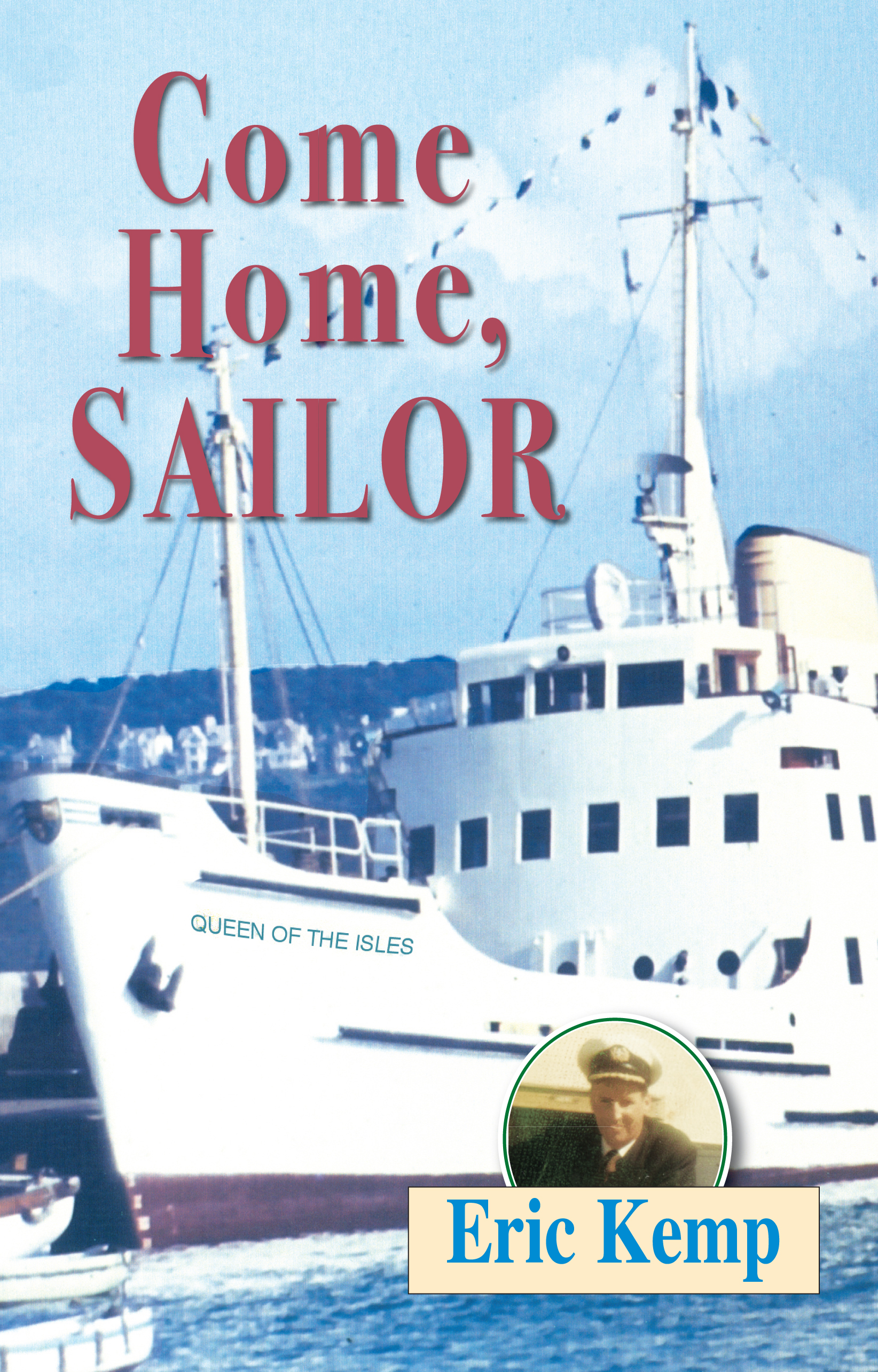
Following his book Yes Dad, I Want to Go to Sea!, Eric Kemp continues his story with his career change from lengthy deep-sea voyages, to a more family friendly lifestyle working from Penzance for the Trinity House Steam Vessel Service. It was while relieving crews and servicing lighthouses and lightships on board THV Stella, that Eric witnessed the notorious Torrey Canyon oil-tanker disaster near Land's End.
By now well established in his hometown of St. Ives, Eric was elected onto the Borough Council, where he helped win public access to previously secret committee meetings, but soon realised he was considered a bit of a maverick within the system. He also now became Captain of the Queen of the Isles, one of the two ships running between Penzance and the Isles of Scilly, a post he held until the ship was sold.
At this point Eric became a self-employed Trinity House Pilot for the port of Penzance; purchasing his own boats and employing crew members to help. His expertise in handling shipping within and around Mount's Bay is reflected through his own experiences and those of the characters on board the ships and boats arriving at the port.
Also appointed the Managing Secretary of the St. Ives Lifeboat Station, he recounts in well-remembered detail a number of the amazing rescues and sad tragedies that took place with both the inshore and offshore lifeboats during the period of the 1970s and 80s, including occasions that were commended with royal approval.
Now retired, Captain Eric Kemp can look back at a long and fulfilling sea-going career where, whether working with captains, coastguards and harbour masters, or rubbing shoulders with royalty, he has always responded to those around him with good grace and humour.
ISBN: 9781852001728
Size: 217x140mm
42 b/w photographs
Binding: hardback
Length: 181pp
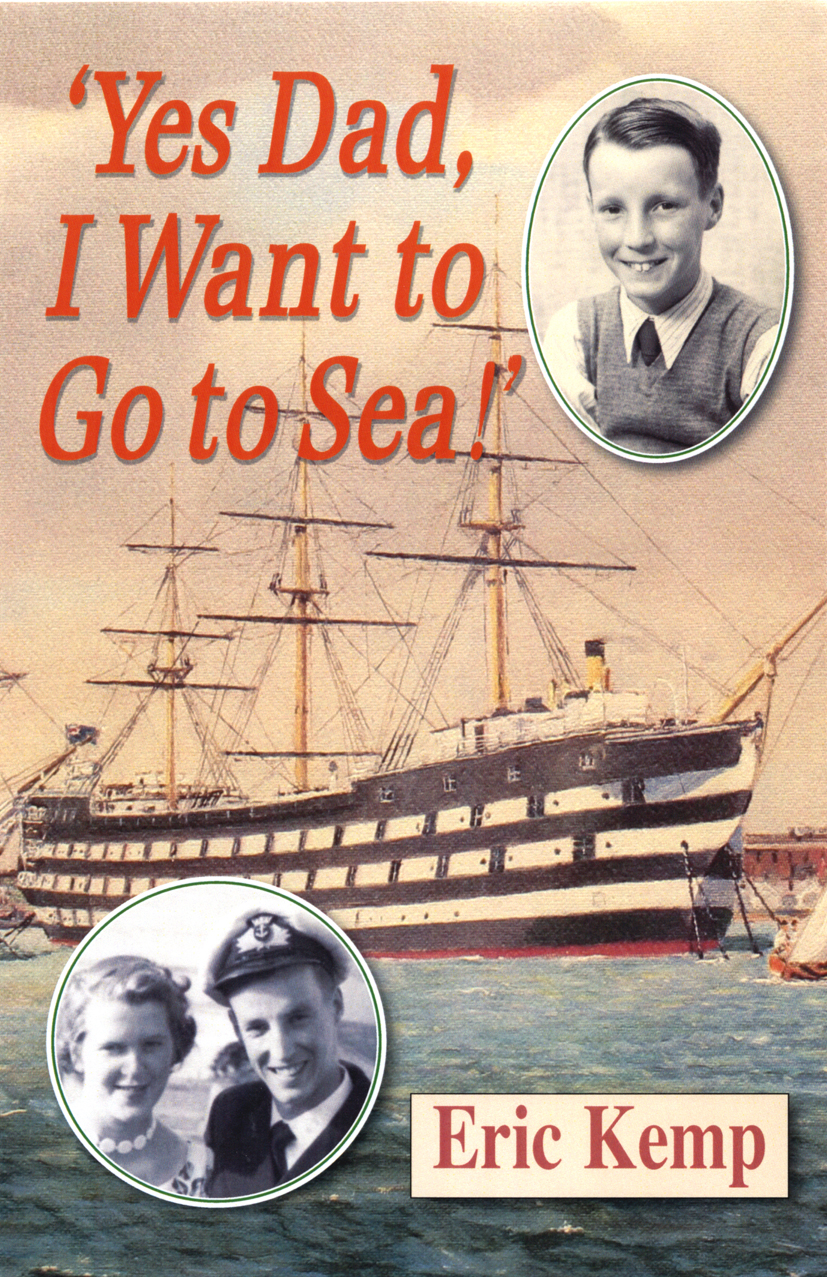
Even during his childhood days in the Cornish fishing town of St. Ives, Eric Kemp knew he was bound for a life at sea. While his mother was cooking pasties in `the slab', better known as a Cornish range, young Eric would be upstairs watching the comings and goings of the ships as they were piloted into the nearby port of Hayle.
Being the son of a captain in the Merchant Navy left Eric's upbringing mainly to his mother, but he remembers well the days when he was able to travel on ships with his father on short voyages, and particularly the time when he finally told his father that he wanted to go to sea himself. After trying in vein to dissuade him from doing so, both his parents finally gave their blessing.
So, after finishing his education at Truro School, he set out to become a cadet on HMS Worcester, then moored on the Thames. His training included work on the famous Cutty Sark and also brief spells of work experience on larger ships such as the MV Singularity.
Following training, Eric became a Merchant Navy apprentice in the shipping company Ellerman Lines. He remembers both tough times and amusing incidents; often involving the many characters of the seamen who made up the crews.
During these years Eric was to travel all around the world, with regular visits to ports in India, Africa, Canada and the USA. However, on marrying a local St. Ives girl he realised that he needed more time at home and this prompted him to join the Palm Line on shorter voyages.
Steeped within this account is the importance of the Merchant Navy in the postwar era through to the mid-1960s; a time when ships were still responsible for nearly all our imports and exports and a time before containers changed the face of shipping forever.
ISBN: 9781852001537
Size: 217x140mm
Binding: hardback
Length: 136pp
48 b&w photographs

An inspiring biographical account of a young boy's chaotic life in a remote, wild, corner of East Africa.
Born in Africa, James's childhood is spent on an isolated gold-mine near Lake Victoria, Tanganyika, with just his sister and mother; his father tragically dying through injuries sustained from World War II. His upbringing is mainly left to a tribal ayah called Amina and an elderly Swahili man, and he learns to speak Swahili before English.
In this unusual setting he soon discovers some stark facts about life through tragedy and danger, but it is the local watu, imbued with kindness and irrepressible humour, that save him from despair, and with whom he learns to fish with home-made lines, eat insects and famously abuse the European hierarchy in real Swahili!
Known as `Jimu' to his friends, he marks out his own country with a Sukuma boy named Lutoli, falls deeply in love with the beautiful, but older, German girl Gretchen and throws himself out of the back of a bus to avoid being sent away to school.
Once at school, in Arusha, James tends to mix with other non-conformers and presents a dilemma to teachers - he is a white boy with a `black spirit'. His gang gets up to nefarious enterprises, bringing them into a state of permanent conflict with the system.
James is fascinated with the history of Tanganyika back to the time when it was a German Colony until 1918. The unparalleled courage of the German leader Paul von Lettow Vorbeck against the British is a beacon to the young boy of what can be accomplished against adversity.
Above all James discovers the world, and life, a little by education, a lot by accident, but overwhelmingly by fate and happenstance, in circumstances few people in the developed world have experienced.
ISBN: 9781852001483
Size: 217x140mm
Binding: hardback
Length: 382pp

Jack Davidson’s account of his years in the RAF during World War II is told with an honest approach that also reflects his great sense of irony.
Coming from a working class area he joined the RAF on 19th July 1940, aged 18, specifically because he thought he would otherwise have been conscripted into the army where he considered that there was more chance of being shot. In this he was proved to be wrong, for after his primary training he was instructed to be a machine-gunner and put on anti-aircraft gun posts at 12 Group Fighter Command during the Battle of Britain.
Following this he retrained as a ground observer, thinking that he would be safely tucked away waiting for German aeroplanes coming to bomb Great Britain. Here he was wrong again, as he was sent overseas and ended up travelling and observing across twelve countries including Africa, India, Iraq, Kuwait, Iran, Russia and Egypt. He was in Tunisia with the victorious eighth army observing for the RAF and the Royal Artillery.
Recounted in a candid narrative, this author does not pull his punches. His travels, active service and sexual activities are laid bare before us but, directly because of this straightforwardness, there are also moments of extreme poignancy.
ISBN: 9781852001452
Size: 217x140mm
Binding: hardback
Length: 184pp

Travelling through every state in the USA is something few people will ever achieve, even those residing in that country, and certainly not in the style of Mavis Gore and her husband Jeff.
After Jeff had a quadruple heart bypass, following which most would succumb to a peaceful early retirement, the couple instead decided to repeat a journey across Canada which they had taken in the early years of their marriage; but this time in a hired motor-home. However, they had not anticipated the return trip through the northern states of the USA would start them on a seven-year exploration of all the 48 lower states, together with `Harvi' the second-hand motorhome they purchased.
Told with good humour and honesty the book recalls their experiences during their travels, vividly capturing the incredible variety of scenery and weather throughout the immense country of America, while also conveying the warmth and friendliness of the American people in every state.
This is the real America, not the USA via Hollywood and TV. It is an America hidden from most of us, ready to unfold as we travel with Mavis and Jeff on a road-trip which eventually includes visits to the two final states and then the couple travelling in New York State on that fateful day of September 11th 2001, with a poignantly descriptive account of the aftermath following the attack on the World Trade Buildings.
The personal interaction between Mavis and Jeff on their travels conveys warm humour (with just occasional agitation!) but most importantly and decisively it reflects a great upbeat and defiant attitude to life in general.
ISBN: 9781852001377
Size: 217x140mm
Binding: hardback
Length: 306pp
Illus: 50 colour photos

From Hardships to Steamships: Memoirs of a Merchant Seaman During World War II
The hardships of Charlie Workman’s early life during the 1920s and 30s in Barrow-in-Furness, were a good grounding for his wartime experiences in the Merchant Navy.
With two sisters and two brothers, those early years were particularly difficult, as his father had lost both legs in a shipyard accident and there was little help at that time. However, his father did instil a strong sense of social justice in him which is reflected in this book.
From experience gained working in the docks, Charlie knew that he wanted to become a merchant seaman. With the imminence of war and conscription making the issue more pressing, he managed to convince the captain of a Norwegian ship, the SS Fidelio, to sign him on, destined for Canada.
His next ship was the SS Llanstephan Castle, taking servicemen via South Africa to the Middle East and India. Then he joined the MV Winchester Castle, firstly taking marine commandos on training exercises around Scottish islands, then, in ‘Operation Ironclad’, back to South Africa.
Experiences at sea and in foreign ports are relieved with occasional return visits home where, of course, the war was also having its impact on family and friends.
Life became ever more hazardous when the Caledonian Star was torpedoed and sunk by a German U-boat off America; Charlie and the crew escaping on lifeboats. Then on the hospital ship Llandovery Castle he witnessed many of the terrible injuries inflicted through war.
For a few years after the war Charlie Workman continued as a merchant seaman, but he finally left, with no regrets; he had taken the path of his choice and seen the world in a way otherwise impossible to him.
ISBN: 9781852001087
Size: 217x140mm
Binding: hardback
Length: 211pp

A Master Mariner of the 20th Century - Captain John Kemp MBE
A lifetime account of Captain John Kemp MBE: from his birth in 1905, in the small Cornish fishing town of St. Ives, and his early experiences growing up before and during the First World War, through to becoming a highly respected Captain in the Merchant Navy with over fifty years of seamanship.
John was enchanted by the sea from an early age. After a brief spell as a butcher's boy, his father, a barber, finally helped him to become an apprentice in the Hain's Steamship Company on the SS Trevessa. This was hard, poorly-paid work, often in squalid conditions, but John was determined to succeed and gain promotion.
Being a man of strong conviction, John eventually asked to be transferred from the Trevessa which he felt was unsafe, despite protestations from his company. His instinct was proved correct when the Trevessa foundered, with some of her crew losing their lives.
John passed as a Master Mariner in 1930, still working for the Hain's Company. In 1938 he joined the Scottish trampship company Andrew Weir; and at the beginning of the war in 1939 the SS Teviotbank together with John as First Officer, was seconded into the Royal Navy to lay mines.
Following the war John rejoined Andrew Weir, earning an MBE for his part in the mass evacuation of Colombo in 1958 and becoming one of their most successful masters until his retirement in 1971.
This is an insight into the Merchant Navy and a real piece of maritime history, with good accounts of the ships and a large number of black and white photographs.
ISBN: 9781852001025
Size: 217x140mm
Binding: hardback
Length: 135pp
64 b&w photos

Here is a book for all those with an adventurous spirit, whether sailors or not.
Beginning with brief details of the author’s struggles during the 1914-45 era between two World Wars, the book moves on to the time when George Payne is able to pursue his life in a more unfettered way. Nearing middle age he starts sailing a small ‘cartop’ dinghy and this experience becomes the first in a new life devoted to boats and boat building.
His adventures really begin when he takes a job in Guyana in South America and builds a new, faster dinghy for local races and to sail far inland through the equatorial forest. An exciting jungle expedition takes him to the rarely visited Kaieteur Falls, several times higher than Niagara.
Returning home, he buys a pocket cruiser to cruise in the treacherous Bristol Channel and then, emboldened by success, he builds an ocean-going catamaran he calls Raka.
Soon after retirement he remarries to Joyce, another keen sailor, and together their cruising plans become more ambitious. However, following the trauma of a particularly horrendous Atlantic storm they decide to sell Raka. This sets them again on their way to the Azores to deliver Raka to Greece, which is an amazing trip that becomes the prelude to more sailing and canal boats, more exotic places, and more contrasting life-styles.
The author’s enthusiasm is always to the fore, with many amusing incidents and even helpful hints for those who themselves set sail. But both George and his wife Joyce are, above all, an inspiration to all readers that life should be lived to the full.
ISBN: 9781852001001
Size: 217x140mm
Binding: hardback
Length: 345pp
51 photographs

Among many books written by pilots there were previously none covering the indomitable spirit of the low-flying crop sprayer. Peter Charles is one such pilot who, after flying 12,000 hours over thirty years, has now written of his adventures carrying out this often dangerous and always demanding type of flying.
His ambition to work on aircraft was first realised when he joined the Air Transport Auxiliary during the Second World War as a ground engineer. Following this he qualified as a Licensed Aircraft Engineer and worked for several airline and charter companies. However, it was on emigrating to Australia in 1951, 'the best £10 I ever spent', that he learnt to fly and obtained his Commercial Pilot's Licence, then joined a newly formed aerial crop spraying company flying Tiger Moths.
He describes flying in many different countries including Africa, South America and Austria, telling of some very amusing incidents as well as some frustrating situations and difficult clients.
Eventually he is able to start his own crop spraying company in Norfolk with Francois Lesieur, a friend from earlier crop spraying operations, and this is when all his previous engineering and flying knowledge is put into good practice.
ISBN: 9781852000776
Size: 217x140mm
Binding: hardback
Length: 240pp
photos & drawings

It is now over 50 years since Mavis and Jeff’s year in Canada in the late 1950s, and Where There’s a Will is an entertainingly written, often light-hearted account of that young couple’s Canadian experiences.
Arriving in Toronto from London late in November, with little money and in freezing temperatures, their initial impression was not good. And it did not improve when Jeff lost his job and they discovered Mavis was expecting their first baby in a country with no health care.
A joking reference to a better life in Vancouver led the young couple, she six and a half months pregnant, on a journey travelling alone across 3,000 miles by car, through bush, forests, prairies and mountains to British Columbia. Much of the journey was on gravel roads in uninhabited countryside, encountering snow, hail, dust and rain storms – and, of course, the inevitable car trouble!
Eventually they arrived safely in Vancouver and fell in love with the place instantly. They found employment but no suitable accommodation, and their baby son was born while they lived in an attic in a house due for demolition!
The book ends on a happy note a year after their arrival in Canada.
ISBN: 9781852000578
Size: 217x140mm
Binding: hardback
Length: 202pp
b/w photos

Some people dream of radically changing their life-styles but never do. Eric Mold and his family did. They sold up their worldly possessions, bought a boat with the money and set out for a life on the high seas.
From the decision on what type of boat to have, to the problem of earning the money to stay afloat, this book chronicles the pitfalls and pleasures which beset this adventurous family. Their experiences both ashore and on board Superstar are frankly described, and interesting encounters with others add to the delights we discover of their new-found existence.
Beginning with them creeping out of the Solent on an ebbtide at midnight with very little skill and practically no experience, and finishing almost four years later in the Caribbean with them as veteran sailors and successful charter boat operators, the book is not only an informative and engaging account in itself, but also explains how anyone who wishes to, can do it as well.
ISBN: 9781852000660
Size: 217x140mm
Binding: hardback
Length: 240pp
photos & drawings


From his early childhood days in St. Ives, Eric had always known he was destined for a life at sea, and he has already told the story of his Merchant Navy cadet training on HMS Worcester in his book Yes, Dad I Want to Go to Sea!
After his training with HMS Worcester, Eric worked as an apprentice with the Ellerman and Bucknall Steamship Company, where he gained his Chief Officer’s Certificate. Following this he joined the Palm Line as a Second Officer.
Here he remembers his five years with the Palm Line from 1960 to 1965. During this time he served in fourteen of the company’s ships, ranging from the ageing Ashanti Palm to the more modern Ikeja Palm. These ships crossed the oceans to West Africa and back, with voyages spread between Dakar in the north to Luanda and Lobito in the south, often with sixteen hour working days in the intense tropical heat.
At this time countries such as Ghana, Nigeria and Sierra Leone were becoming independent and this often added considerably to the stress and difficulties when loading and off-loading goods in the port docks, and it was Eric’s job to oversee that these operations ran smoothly.
Eric recounts the highs and lows he faced in an honest and engaging way, whether it was facing a ship plagued with rats, establishing a friendly relationship with dock workers, all of whom he always treated as equals regardless of hierarchy, or dealing with captains that bullied and made life difficult and occasionally dangerous.
During his time with the Palm Line Eric married Jill and his first son Ian was born, and Eric recounts how he was always happiest on his return to his hometown of St. Ives in Cornwall to be with his family. So, after a sadly rather fractious experience with the company, and having by then gained his Master Mariner’s Certificate, he left the Palm Line. He then went on to have his second son Jeremy and become captain of the Isles of Scilly ship RMS Queen of the Isles.
ISBN: 9781852002107
Size: 217x140mm
Binding: hardback
Photos: TBC
Length: TBC